
 Help Center



Supporting Conservation
Oregon Tilth believes conservation-minded agriculture provides environmental and financial benefits that make a case for a better food system. We bring together farmers and researchers, using data to sharpen farm strategies that benefit people and the planet. Our goal is to link farmers to resources — model conservation production practices that enhance natural resources, protect biological diversity, and provide economic viability.

Technical Assistance
Oregon Tilth formed a contribution agreement in 2010 with the United States Department of Agriculture’s Natural Resources Conservation Service (NRCS) to increase conservation on organic farms. Oregon Tilth has since had the opportunity to work with NRCS on a variety of projects and initiatives across the country.
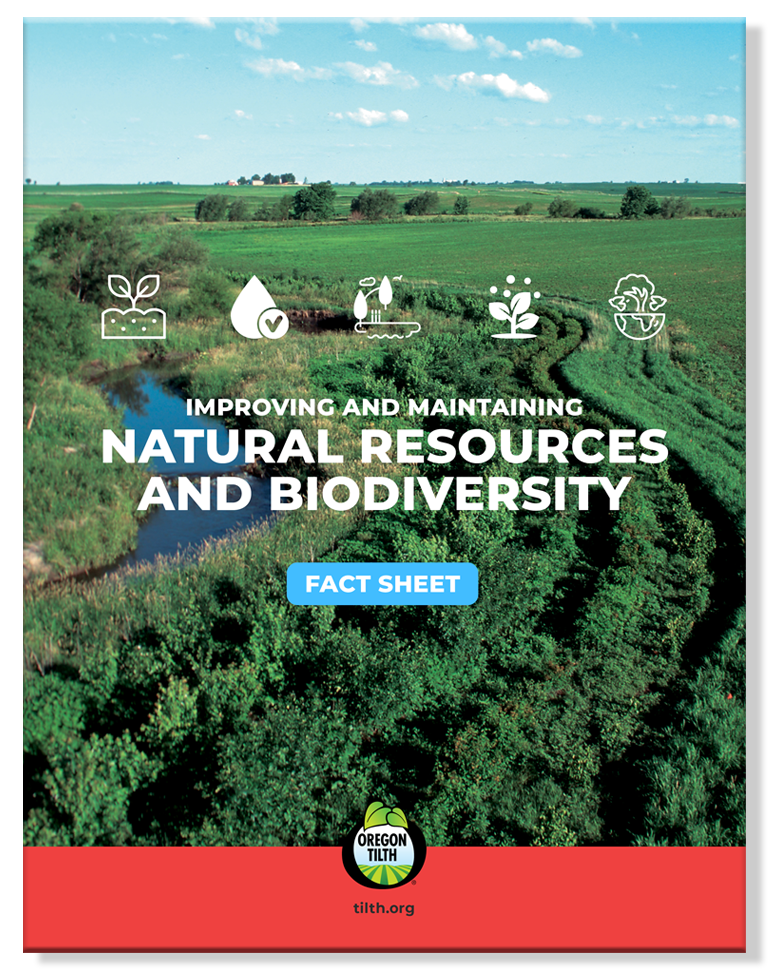
Helping NRCS staff better understand organic systems, regulations, and practices supports the ultimate objective of increasing support for organic producers in meeting or exceeding their conservation goals. We have leveraged this knowledge of on-farm conservation to create resources for farmers, like this Improving and Maintaining Natural Resources and Biodiversity Fact Sheet. Our partnership with NRCS directly contributes to our mission of sharing knowledge and supporting social and environmental sustainability in our food system.

NRCS Support for On-Farm Conservation
The USDA Natural Resources Conservation Service (NRCS) provides technical know-how and funding to support on-farm conservation for organic and transitioning producers. NRCS assistance aligns well with USDA Organic regulations and can help producers meet organic certification requirements, including:
- Soil health: cover crops, conservation crop rotation, compost, biochar, nutrient management and more.
- Natural resources and biodiversity: hedgerows, buffers, wildlife habitat, plantings for pollinators, and more.
- Livestock practices: pasture and grazing management, diverse pasture plantings, fencing, walkways, watering facilities and more.
- Water conservation: irrigation systems, water catchment, wetland enhancement and more.
NRCS has two core programs that align well with organic regulations and help producers support natural resources and biodiversity.
Environmental Quality Incentives Program (EQIP)
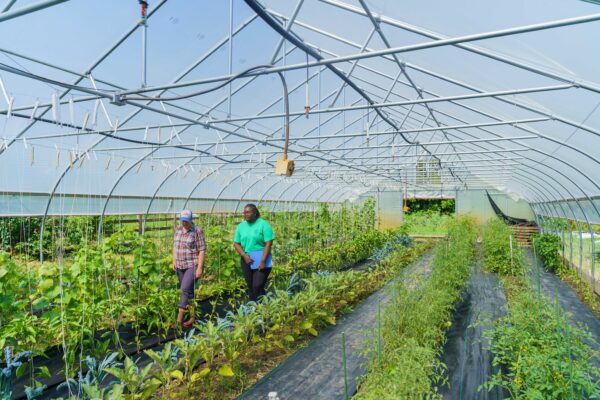
EQIP provides financial support and technical assistance to implement conservation practices on working agricultural land. The program offers support for practices that are key components of organic farms. Examples include establishing buffer zones, planting pollinator habitat, improving cropping rotations, creating a rotational grazing system, and building nutrient management.
Conservation Stewardship Program (CSP)
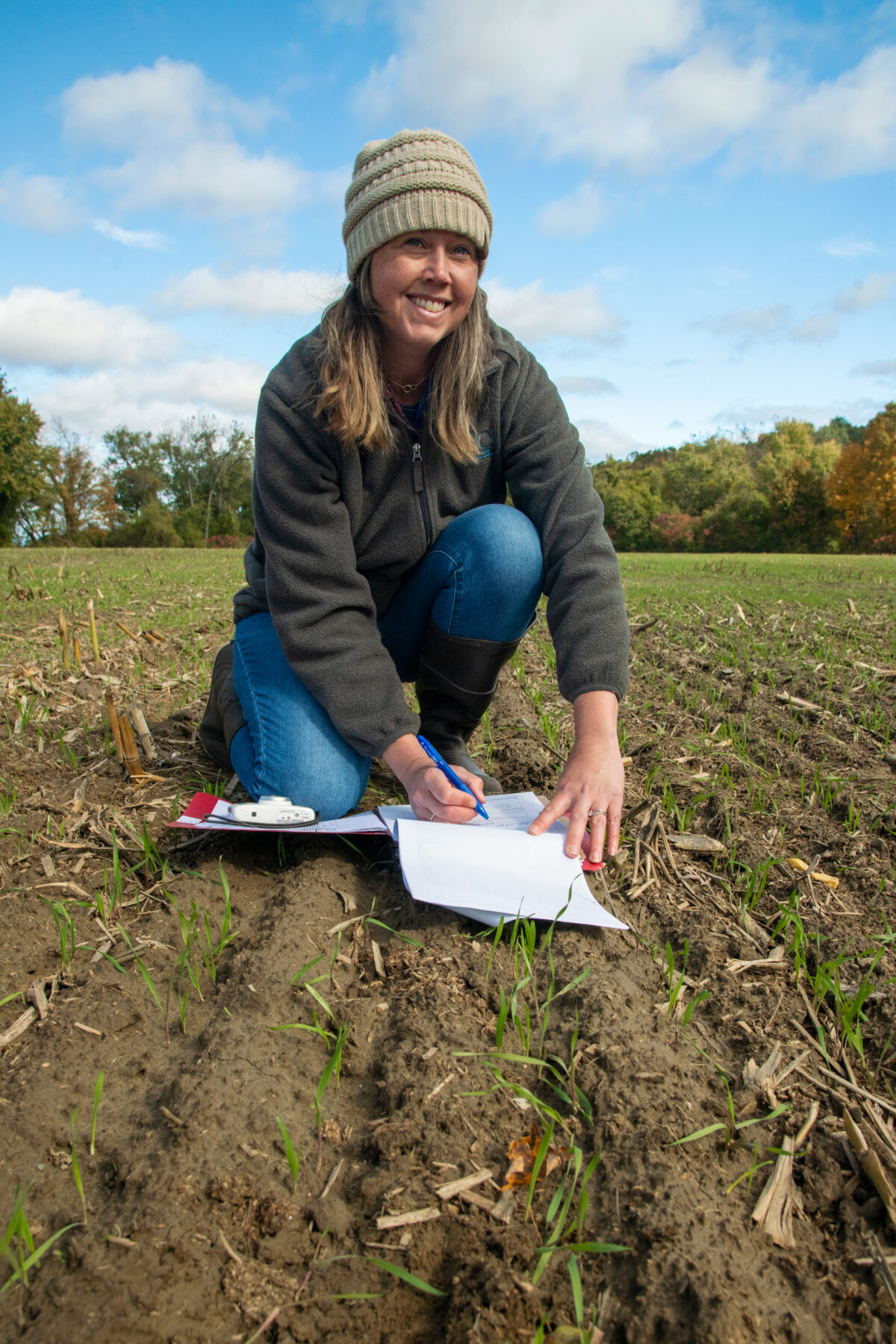
CSP offers technical assistance and payments for actively managing, maintaining, and expanding conservation activities. These include cover crops, rotational grazing, ecologically-based pest management, and buffer strips.
Regenerative Agriculture Pilot Program (RPP)
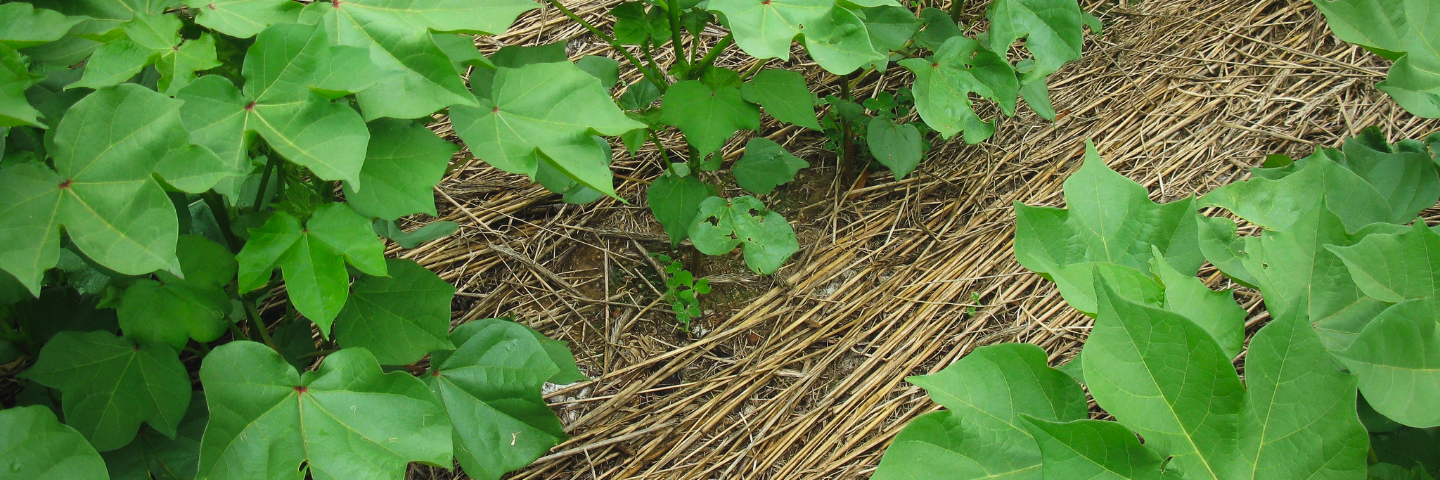
This pilot program provides financial and technical assistance through EQIP and CSP. It requires a complete, whole-farm assessment of resource concerns, with a focus on soil health and water management. This is a 5 year contract with soil health testing required the first and last year. To qualify, growers must implement at least one of the primary conservation practices including cover crop, grazing management, nutrient management, etc. More information can be found here.

Getting Started
Contact your local NRCS office. Staff will walk you through the entire process and visit your farm to discuss options. Sign-up is open year-round, deadlines to be considered for funding in a given year vary.
A few considerations for when you reach out:
- Contact your local NRCS office when you have an opening in your schedule. The process takes time. We suggest contacting NRCS in the offseason.
- Deadlines for NRCS programs vary by year and state. It’s best to have your paperwork completed in advance of the deadlines.
- If you have never worked with a USDA agency before, be sure to stop by your local FSA office to establish your farm record. This is required to apply for NRCS programs. NRCS and FSA offices are usually in the same building.
- Some NRCS staff may not be experts in USDA organic regulations. Get approval from your certifier before making changes on your farm if the activities aren’t in your OSP.
- Check out NRCS’s brochure to learn a bit more about language and terms used at NRCS.
- Check out the Organic Practices and NRCS Resources Crosswalk prepared by the National Organic Program to see how NRCS practices can support meeting organic regulations.

Additional Conservation Resources
We have hosted several webinars through the NRCS Science & Technology Training Library on organic conservation topics, such as Benefits of Intercropping in Organic Systems and Creating and Maintaining Biodiversity in Organic Perennial Systems. Use the search term “organic” to view more.
Conservation Crop Rotation (328) in Organic Systems: Oregon Implementation Guide provides guidance for implementing the NRCS Conservation Crop Rotation practice in organic systems in Oregon and discusses considerations for designing a crop rotation based on an organic grower’s conservation goals.
The Natural Resources and Biodiversity Template is intended to be an accompaniment to the Improving and Maintaining Natural Resources and Biodiversity Fact Sheet above. It provides example practices to maintain or improve the natural resources of the operation, examples of documentation to show compliance, and form fields to fill in your own practices and documentation.
For further reading, view our Resource Library, the USDA National Organic Program NOP 5020: Natural Resources and Biodiversity Conservation, Wild Farm Alliance, Xerces Society, Sustainable Agriculture Research and Education, eOrganic, and NCAT ATTRA. NRCS and many local resource conservation districts, state departments of agriculture or natural resources, and non-governmental organizations can provide technical assistance and support producers in implementing natural resource and biodiversity conservation practices.