
 Help Center


Organic Week 2026: Trust, Advocacy and the Future of Organic | Oregon Tilth
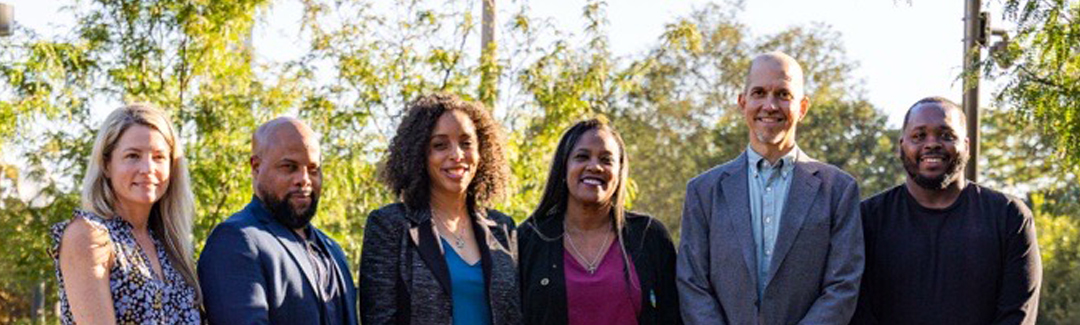
From left, Senior Marketing and Communications Strategist Allison Keir, Chief Marketing Officer Edward Johnson, CEO Kellee James, Client Experience Manager Janae Betterton, Chief Program Manager Ben Bowell, and Chief Operations Officer Dr. Leonard Freeman, Jr., Oregon Tilth team members in Washington, D.C. during Organic Week 2026
At Organic Week 2026 in Washington, D.C., Oregon Tilth connected with farmers, businesses, certifiers, researchers, advocates and partners to listen, strengthen relationships and bring organic priorities into conversations about the future of the sector.
The Organic Trade Association (OTA) hosted Organic Week 2026, bringing the organic community together for three days in September.
For more than 25 years, Oregon Tilth has served as an OTA member. We work alongside fellow members to elevate farmers’ voices across the country and advocate for the organic sector.
Oregon Tilth came with a clear purpose. We wanted to listen to the people we serve, cultivate relationships across the organic community, advocate for organic agriculture, and bring what we learned back into our work.
Our team met with clients and partners, joined industry and policy conversations, connected with U.S. Department of Agriculture leaders, gathered stories from across the organic community and participated in Advocacy Day. Those experiences raised questions that extend beyond the event. How can we show the value of organic alongside the standards that define it? How can federal programs respond to producers’ needs? And how do we protect trust when verified information competes with a growing volume of unsubstantiated claims?
What Organic Week 2026 revealed about trust
The Organic industry rests on comprehensive standards, verification and accountability. Those safeguards give the USDA Organic seal meaning. But in a marketplace crowded with food and sustainability claims, verifying compliance and communicating measurable impact are different tasks. Both matter for confidence in organic.
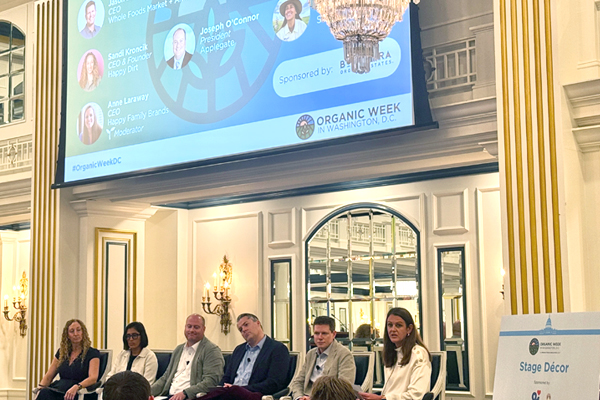
Organic Week brought together participants from across the organic sector for conversation, connection and advocacy.
Throughout Organic Week, speakers and participants returned to a difficult question.
How can the organic community protect the integrity of its standards while showing buyers and consumers more clearly what organic practices achieve? Discussions about certification and measurable impact highlighted the need for credible data that demonstrates outcomes without creating another reporting burden for farmers.
“Organic belongs to all of us. But with that belonging comes our shared responsibility. Our progress has never been the work of one farmer, one organization or one brand. It’s been about us coming together for collective action, working together to grow and protect organic, build our community, strengthen our market and make our voices heard. We are stronger together,” said Tom Chapman, Co-CEO of the Organic Trade Association.
The shared responsibility Tom described reaches beyond defending the seal. Certification verifies that farms and businesses comply with USDA organic requirements. It does not automatically produce aggregated measures of outcomes across operations. Researchers, buyers and consumers also want to understand what organic practices mean for soil health, resilient agricultural systems and the communities that depend on farming. Any effort to gather and communicate that information must use sound methods, protect confidential information and provide value to producers.
For Oregon Tilth, the opportunity goes beyond explaining how certification works. As a certifier, we contribute practical knowledge, collaborate with researchers and explore ways to connect verified practices with trustworthy information about impact. We should do so without confusing compliance with outcomes or adding unnecessary demands on the farmers we serve.
Listening keeps our work grounded
Some of the week’s most valuable conversations happened outside formal sessions. Our team spent time with clients, farmers, businesses, fellow certifiers, nonprofit partners and other leaders across the organic community. Those exchanges revealed what works, where challenges remain and where partnerships can make a difference.
“Being in the room is powerful and reinforces our commitment to advocate and continue our mission,” said Janae Betterton, Client Experience Manager of Oregon Tilth.
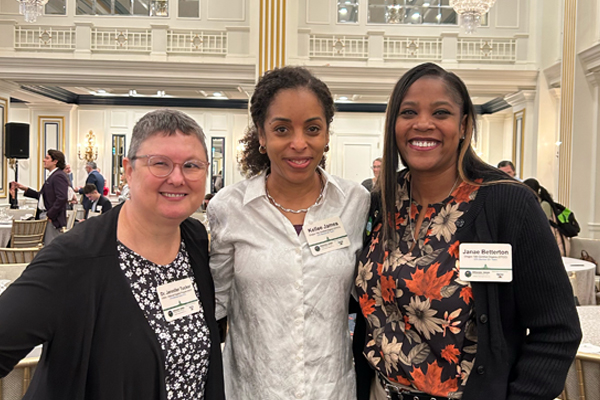
From left, Jennifer Tucker, Ph.D., deputy administrator of the USDA Agricultural Marketing Service’s National Organic Program, connects with Oregon Tilth CEO Kellee James and Client Experience Manager Janae Betterton during Organic Week 2026 in Washington, D.C.
Not every conversation was easy. Clients recognized what Oregon Tilth does well and raised concerns about timeliness and certification expectations. Those exchanges gave Janae an opportunity to acknowledge challenges, discuss improvements and identify areas for follow-up. Meaningful client engagement requires us to hear candid feedback and act on what we learn.
Organic Week also opened conversations about education, workforce development, training and new partnerships. The lesson carries beyond the conference. Trust grows when clients can count on clear communication, realistic expectations and relationships that continue between certification transactions.
Keeping producers at the center
Buyers at Organic Week spoke about the need for more domestic organic supply. Farmers described another side of that ambition, including limited processing capacity, transportation costs, uncertain market access and the resources required to expand. Strong demand does not automatically create a viable business for the people producing organic food.
Gaps in infrastructure can stretch supply chains, increase costs and reduce the premiums that help farms remain viable. Growing organic therefore requires more than encouraging consumers to buy it. Producers also need dependable markets, appropriate infrastructure and support that reflects the realities of their operations.
“Conversations frequently centered on strengthening conditions, resources, and support farmers need to ultimately grow and sustain operations within organic agriculture,” said Allison Keir, Senior Communications and Marketing Strategist of Oregon Tilth.
Participants also discussed access to organic education and resources, particularly in regions and communities with fewer established support networks. Needs differ by farm, location and production system. Listening to those differences helps Oregon Tilth understand where education and partnerships can make organic more accessible.
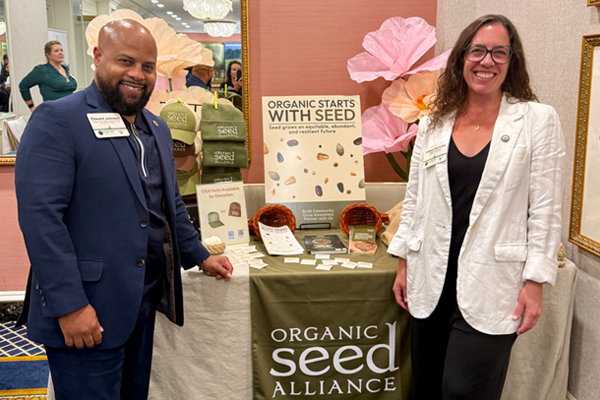
From left, Edward Johnson, chief marketing officer at Oregon Tilth, and Cathleen McCluskey, executive director of Organic Seed Alliance, connect during Organic Week 2026 in Washington, D.C., where conversations highlighted education, resources and partnerships that support organic producers.
Keeping producers at the center means connecting people to the information, relationships and resources they need to enter organic, maintain certification and sustain their businesses over time.
Those practical challenges should inform the conversations we carry into advocacy.
How Organic Week 2026 informs our advocacy
Oregon Tilth’s advocacy priorities have long reflected our mission and continue to guide our work today. We focus on protecting organic integrity, supporting continuous improvement, advancing conservation and resilience and strengthening investment in organic agriculture.
Our priorities endure, but federal programs, legislative timelines and agency capacity can change. That uncertainty makes continued relationships and practical follow-through especially important.
During Organic Week, our team discussed the Farm Bill, agricultural relief and access to USDA programs. Ben Bowell, Oregon Tilth’s Chief Program Officer, met with leaders from USDA Farm Production and Conservation and the Natural Resources Conservation Service (NRCS). He raised concerns about changes to organic-targeted support, how agencies identify organic producers receiving assistance and whether field staff have sufficient training in organic agriculture. Agency leaders expressed openness to further discussion, and Ben plans to continue those conversations with NRCS staff.
“Our advocacy priorities endure even as the issues change. We remain focused on continuous improvement, making sure conservation programs work for organic producers and strengthening investment in the research, extension and resources organic agriculture needs,” said Ben Bowell, Chief Program Officer of Oregon Tilth.
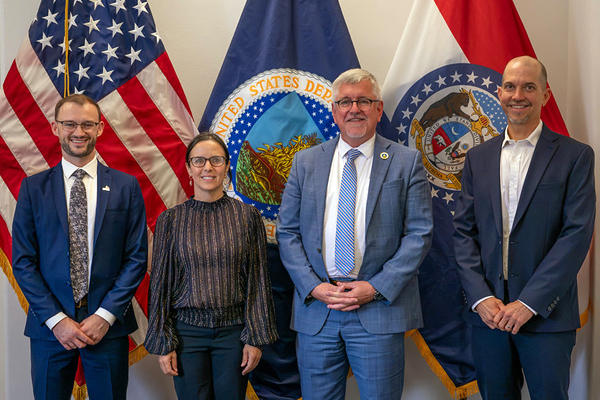
From left, Jesse Womack, policy specialist at the National Sustainable Agriculture Coalition; Brise Tencer, executive director of the Organic Farming Research Foundation; Richard Fordyce, USDA under secretary for Farm Production and Conservation; and Ben Bowell, chief program officer at Oregon Tilth, during Organic Week 2026 in Washington, D.C.
The challenge is not simply whether a program exists. It is whether organic farmers can find it, access it and receive informed assistance. If program data cannot identify the organic producers an agency serves, it becomes harder to assess where support may be falling short. These are practical questions that deserve sustained attention as agencies and policies evolve.
That is why Oregon Tilth maintains relationships with federal agencies and members of Congress even when decisions take time. We bring the experience of producers, clients and certification professionals into conversations about implementation, rulemaking and the programs that affect organic agriculture. Consistent engagement helps keep producers’ needs part of those discussions.
One important place where that work continues is the National Organic Standards Board.
Continuing the work through the NOSB
The National Organic Standards Board (NOSB) brings together 15 public volunteers from across the organic community. The Organic Foods Production Act (OFPA) established the board, and the Federal Advisory Committee Act (FACA) governs it. The NOSB considers issues involving the production, handling and processing of organic products and makes recommendations to USDA. It also has specific responsibilities related to the National List of Allowed and Prohibited Substances.
The NOSB generally meets twice each year to discuss its agenda, vote on proposals and make recommendations to the U.S. secretary of agriculture. The board and USDA’s Agricultural Marketing Service invite written and oral comments, and all meetings remain free and open to the public. When at least two-thirds of board members vote in favor of a proposal, the NOSB sends its recommendation to USDA through the Agricultural Marketing Service’s (AMS) National Organic Program.
Public participation brings practical experience into the board’s deliberations. Farmers and handlers know how requirements operate on farms and throughout supply chains. Certifiers see where regulations may prove difficult to interpret or implement. Researchers, advocates and consumers bring additional perspectives. Together, those voices can help the NOSB develop recommendations grounded in how the organic system works.
The NOSB will meet virtually Oct. 27-29, 2026. The board plans to review proposed additions and removals to the National List, consider substances facing sunset review in 2028 and discuss organic policy recommendations.
Oregon Tilth supports the NOSB’s role in continuously improving the organic system. We value the board’s work and the public process that allows us to bring producer, client and certifier experience into discussions about rigorous, clear and workable standards.
As Organic Month draws to a close, our work continues. Organic Week gave us the opportunity to listen and bring organic priorities into national conversations. The NOSB process offers another way to follow emerging issues, share practical knowledge and stay engaged as the board develops recommendations to USDA.
Moving organic forward together
Organic Week surfaced connected challenges. How do we demonstrate value beyond certification compliance, improve the conditions that sustain organic producers and ensure their experience informs federal programs? Another challenge crosses every one of those questions. Credible information now competes with an extraordinary volume of unverified claims.
“The strength of organic begins with trust. But we cannot assume people understand what the USDA Organic seal verifies when other labels and other technology platforms place competing claims in front of them every day. As certifiers, we must make reliable information easier to find, respond to misinformation, and explain the evidence behind organic. Protecting trust also means continuing to earn it,” said Kellee James, CEO of Oregon Tilth.
That responsibility extends beyond Organic Week. It calls for collaboration among farmers, businesses, researchers, certifiers and partners who can make the evidence behind organic clearer and more accessible. Oregon Tilth will bring the relationships and questions we carried home from Washington into that work.
Our mission is to support and promote biologically sound and socially equitable agriculture. Our vision is community-led food systems that enrich people and planet, together. We advance both by supporting credible certification, practical education, responsive client service and participation in public processes that shape organic agriculture.
Organic Week gave us more than a chance to gather. It challenged us to ask sharper questions and follow through with staff, clients, partners, federal agencies and advocates.